Faith When God Feels Silent
Faith when God feels silent can be hard to hold onto. Find hope, honesty, and comfort for the season when God seems far away.

You pray the same prayer again. You wait for clarity, relief, or even a small sign that God is listening. Nothing changes. The room stays quiet, the diagnosis remains, the relationship does not heal, and you begin to wonder whether faith is still possible when God feels silent.
What Do You Do When God Feels Silent?
When God feels silent, faith does not require you to deny your confusion or manufacture hope. You can tell God the truth, keep simple spiritual practices, lean on trusted people, and make the next faithful choice available to you. Silence may change how faith feels, but it does not mean your faith has failed.
That answer may sound too modest when you want something decisive. You may want a reason, a date, or a clear word about what comes next. Instead, you are left with another ordinary morning and the same unresolved ache.
I do not think we help one another by pretending that this is easy. Silence can feel like abandonment, especially when you have prayed sincerely and waited patiently. It can make you question what you believe about God, prayer, and your own spiritual life. It can even make worship feel dishonest.
Yet faith in such a season may be quieter than you expected. It may look like saying one honest sentence to God. It may mean sitting in church without singing because the words feel beyond you. It may mean allowing someone else to pray when you cannot. These are not lesser forms of faith. Sometimes they are the most truthful forms available.
Why Does God’s Silence Feel So Personal?
Unanswered prayer rarely stays confined to the original request. Before long, it raises deeper questions: Does God care? Have I done something wrong? Was I foolish to trust? Why does another person seem to receive the very thing I have begged for?
These questions become especially sharp when silence is joined by grief. A funeral has taken place, but the house still contains the person’s shoes. A marriage has ended, but your phone still holds years of messages. A doctor has delivered the news, and you have to drive home through ordinary traffic while your whole understanding of the future changes.
In moments like these, God’s silence can feel personal because prayer is personal. You were not submitting a customer service request. You were speaking to the One you believed knew you completely. When no answer seems to come, the silence can feel like a wound inside the relationship itself.
There may be many reasons we do not perceive God’s response. Exhaustion, depression, trauma, disappointment, and prolonged stress can numb our emotions. Our expectations may also be fixed on one particular outcome, making any other kind of answer difficult to recognize. Sometimes circumstances need time to unfold. Sometimes no satisfying explanation appears at all.
That last possibility matters. We should be cautious about explaining another person’s pain. Not every loss is a lesson we can identify, and not every delay becomes meaningful once enough time passes. Quick explanations often protect the speaker from discomfort while leaving the hurting person even more alone.
Faith does not give us permission to call devastation good. It gives us a place to bring devastation without editing it first.
What Does the Bible Say About Divine Silence?
The Bible does not hide the experience of God’s silence. Scripture contains people who trusted God and still felt ignored, confused, or forgotten. Their words are preserved not as examples of bad faith, but as part of faithful testimony.
Psalm 13 opens with a question many believers are afraid to say aloud: “How long, Lord? Will you forget me forever? How long will you hide your face from me?” (Psalm 13:1). David does not begin with an explanation. He begins with protest. He names the distance as he experiences it.
That is important because biblical lament speaks to God rather than merely talking about God. Lament may sound angry, bewildered, or exhausted, but it still turns toward the relationship. The person praying has not found a neat answer. Even so, they continue addressing God.
Job also refuses shallow explanations. His friends repeatedly try to make his suffering fit a tidy moral system. They assume pain must be evidence of personal failure. Job insists that their account is not true. When God finally speaks, Job receives an encounter, but not a detailed explanation for every loss.
Jesus himself prayed from within the experience of abandonment. On the cross he quoted Psalm 22: “My God, my God, why have you forsaken me?” Christian faith therefore does not claim that feelings of divine absence are foreign to God. At the center of Christianity is Christ entering suffering deeply enough to voice that terrible question.
This does not answer every theological problem. It does tell us that confusion is not automatically rebellion and that grief is not evidence of spiritual immaturity. The Bible makes room for prayers that do not resolve by the end of the paragraph.
Does God’s Silence Mean God Is Absent?
God’s silence in Scripture is also not the same as God’s absence. That distinction can be hard to believe emotionally, and it should not be used to dismiss pain. Still, Christian hope rests on the conviction that our ability to sense God is not the measure of God’s nearness. Feelings matter, but they are not always reliable instruments for measuring what is ultimately true.
How Can You Move Through a Season of Unanswered Prayer?
Begin by lowering the pressure to pray impressively. If all you can say is, “God, I do not know where you are,” say that. If you have no words, sit in silence for five minutes. Prayer is not made valid by emotional intensity or polished language.
You might also borrow words from Scripture. The lament psalms can carry what you cannot form on your own. Read Psalm 13, Psalm 22, Psalm 42, or Psalm 88 slowly. Notice that Psalm 88 ends in darkness. The Bible includes a prayer that does not arrive at visible relief, which means your unresolved prayer still belongs in the life of faith.
Second, keep your spiritual practices small and sustainable. Read one paragraph rather than forcing yourself through several chapters. Attend worship without demanding a powerful experience. Receive communion. Take a walk and speak honestly to God. Repetition can keep a thin thread of connection when emotion offers no support.
Third, let trustworthy people know what is actually happening. You do not need someone who will give you a reason for your suffering. You need someone who can sit at the kitchen table, listen without correcting you, and remain when the conversation has no conclusion. A pastor, therapist, spiritual director, or mature friend may help you separate theological questions from depression, trauma, or physical exhaustion.
Fourth, pay attention to your body. Sleep, food, medication, movement, and medical care are not distractions from faith. Human beings are not disembodied souls. A nervous system under constant strain can make prayer, concentration, and hope much harder. Seeking professional help does not mean you trust God less.
Fifth, resist interpreting every event as a coded message. When you are desperate for direction, a song lyric, social media post, or piece of news can begin to feel like a private signal. God can guide in unexpected ways, but anxiety can also make patterns appear more certain than they are. Test important decisions through Scripture, wisdom, time, circumstances, and trusted community.
Finally, focus on the next honest act rather than solving your whole future. Make the appointment. Answer the necessary email. Eat lunch. Ask for help. Pray one sentence. Faith often survives through concrete decisions that seem unremarkable at the time.
If unanswered prayer is at the center of your struggle, you may also find companionship in When Prayer Feels Unanswered: Keeping Faith. Sometimes it helps simply to know that another believer has walked through the same questions without treating them as a spiritual defect.
How Do You Keep Faith Without Pretending It Does Not Hurt?
You keep faith by refusing the false choice between trust and honesty. You do not have to say that everything is fine in order to remain close to God. You do not have to call loss a blessing, rush grief, or thank God for pain you would never wish on another person.
There is a kind of religious performance that looks like confidence but is mostly fear. It worries that one hard question will unravel everything. Mature faith can tolerate questions because its foundation is not our ability to remain emotionally certain every day.
Some days, trust may sound like praise. Other days, it may sound like, “I am still here, but I am angry.” There may also be days when you cannot address God at all. On those days, the faith of your community can hold you. Someone else can sing, pray, and believe beside you without forcing you to match their emotional state.
Keeping faith may also require releasing an old picture of how life was supposed to work. Many of us quietly assume that sincere prayer, responsible choices, and Christian commitment should produce a recognizable kind of protection. When that expectation collapses, we grieve not only what happened but also the world we thought we lived in.
That grief deserves time. It cannot be argued away. Yet the loss of one understanding of God does not have to mean the loss of God. Sometimes faith becomes less certain in its explanations and more grounded in relationship. It learns to say, “I do not understand this, and I will not pretend that I do. But I am not ready to stop turning toward God.”
Hope in this place is not the prediction that your circumstances will soon improve. It is the quieter belief that pain will not have the final authority over who you become. God may meet you through Scripture, sacrament, therapy, friendship, rest, or a strength that appears only when the next step is required.
You may still wake tomorrow with the same question. The prayer may remain unanswered, and the silence may still hurt. But your honest presence before God is not nothing. For now, faith may simply mean leaving the door unlocked, even when you cannot hear anyone on the other side.
Keep Reading
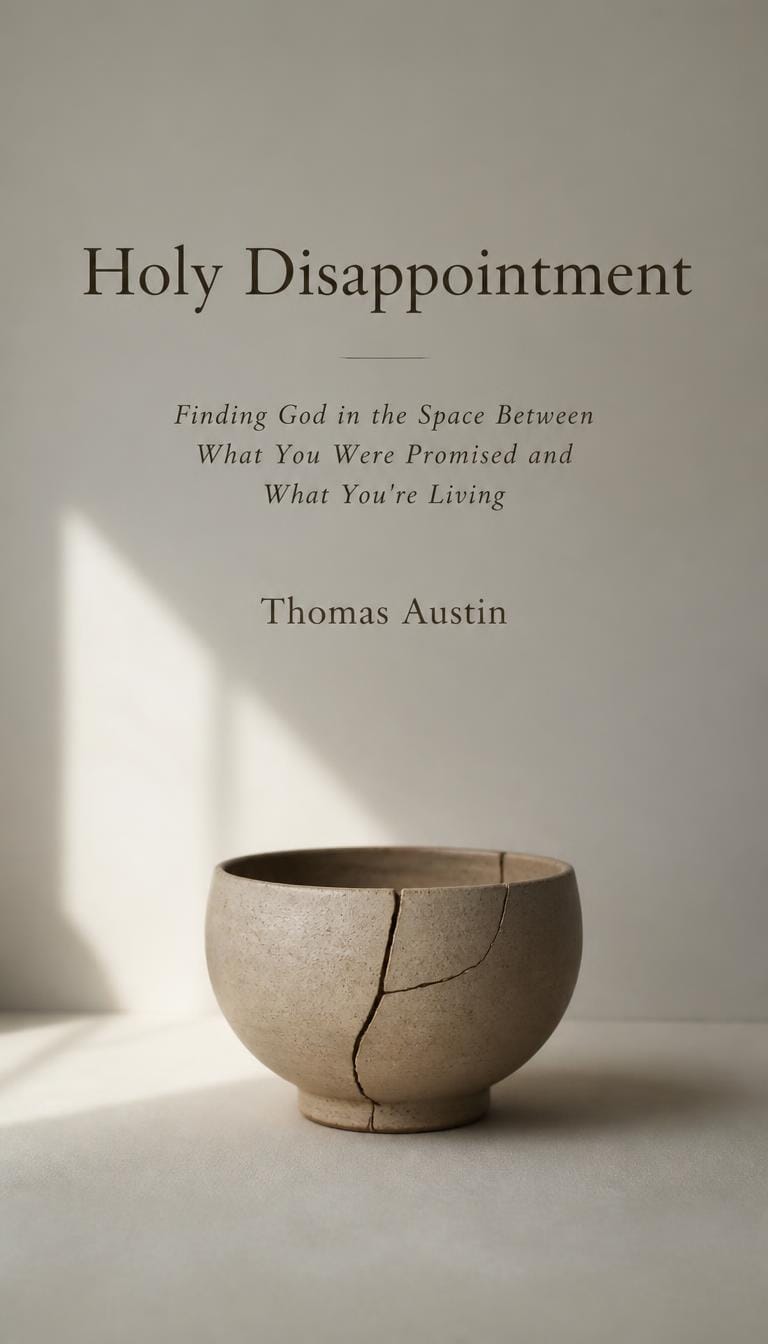
If this resonated, my book Holy Disappointment goes further into finding god in the space between what you were promised and what you're living. A companion for anyone whose faith didn't turn out the way they expected. Holy Disappointment walks through twenty chapters of honest reflection on unmet expectations, unanswered prayers, and finding God in the gap between what you were promised and what you're living. Get Holy Disappointment on Amazon.


Comments ()