Faith When God Seems to Delay
Faith when God seems to delay can test your heart. Discover hope, honesty, and steady trust when God’s timing feels painfully slow.

You have prayed until the words feel worn thin. The diagnosis has not changed, the job has not come, the relationship has not healed, and the door you believed God would open remains shut. What do you do when waiting on God’s timing starts to feel less like patience and more like abandonment?
How Do You Keep Faith When God Seems to Delay?
When God seems to delay, keep faith by telling him the truth, staying rooted in Scripture, receiving support from others, and taking the next faithful step available. Trust does not require pretending the wait is painless. It means continuing to turn toward God even when you cannot understand his timing or see an answer.
That answer is simple to state and difficult to live. Waiting can unsettle everything you thought you knew about God. You may have believed that sincere prayer would bring clarity, that obedience would lead to an open door, or that enough faith would make the path easier to recognize. Instead, days become months. Sometimes months become years.
During a long delay, hope rarely disappears all at once. It thins gradually. You stop expecting good News. You hesitate before praying because you are tired of hearing your own request. Someone asks how things are going, and you give the shortened version because the full answer feels too heavy for casual conversation.
None of this automatically means your faith is failing. Weariness is not the same as unbelief. Confusion is not rebellion. Even the question “Where are you, God?” can be an act of faith, because it is still addressed to God. You are still turning toward him, even if you are doing so with shaking hands.
Why Does God’s Timing Feel So Painful?
Delay hurts because we do not experience time in the abstract. We experience it in bodies that age, bills that arrive, empty chairs at the table, and opportunities that do not remain open forever. Telling someone to “just wait” can sound careless when every passing week appears to narrow the future.
There is often grief inside waiting. A couple praying for a child is not merely waiting for a date on the calendar; they may be grieving the family they imagined. A person searching for work is not simply waiting for an offer; they may be watching savings disappear while shame quietly grows. Someone praying for reconciliation may be facing another birthday, holiday, or hospital visit without the person they miss.
That is why easy explanations do damage. We cannot assume every delay is God preparing a bigger blessing. We cannot tell people that an answer will arrive as soon as they learn the right lesson. Scripture does not give us permission to reduce another person’s pain to a spiritual formula.
Sometimes circumstances are shaped by human choices, broken systems, illness, injustice, or the ordinary limits of life in a fractured world. Sometimes no clear explanation comes at all. Faith does not require us to label every painful event as a carefully coded message from God.
It is also important to admit that what we call a delay may never end in the way we expect. Some prayers are not answered with the healing, marriage, restoration, or opportunity we asked for. Christian hope is not a guarantee that every desired outcome will arrive on our preferred timeline. It is confidence that our lives remain held by God, even when the outcome is painful and unfinished.
What Does the Bible Say About Waiting on God’s Timing?
The Bible speaks honestly about waiting because much of its story takes place between promise and fulfillment. Abraham receives a promise and then lives for years without seeing it completed. Israel waits under oppression. David is anointed king but spends long seasons hiding from Saul. The prophets speak of restoration while standing among ruins.
Scripture does not hide the emotional cost. Psalm 13:1 begins, “How long, Lord? Will you forget me forever?” That is not a polished prayer from someone safely beyond the crisis. It is the voice of a person who feels overlooked and is willing to say so plainly.
The psalm does not rebuke David for asking. His lament becomes part of Scripture, which means grief-filled prayer belongs in the life of faith. God is not threatened by our unedited sorrow. The Bible gives us words for the days when worship sounds less like celebration and more like refusing to leave the room.
The story of Lazarus offers another difficult picture. In John 11, Jesus hears that Lazarus is sick, yet he remains where he is for two more days. By the time Jesus arrives, Lazarus has died. Martha meets him with words that carry both trust and accusation: “Lord, if you had been here, my brother would not have died.”
Jesus does not shame her. He also does not stand at the tomb offering a detached explanation about divine timing. John 11:35 gives us the concrete detail: “Jesus wept.” Whatever else we believe about God’s purposes, we must make room for the God who meets grieving people with tears.
The resurrection of Lazarus matters, but it does not erase those tears. In the same way, future hope does not make present suffering unreal. The Christian story says death will not have the final word. It does not say death, disappointment, or waiting should feel harmless now.
God’s timing in Scripture is often mysterious, but God’s character is revealed most clearly in Jesus. We may not understand why a particular prayer remains unanswered. We can still look to Christ and see that God is not indifferent to suffering, distant from grief, or unwilling to enter the human experience of waiting.
What Can You Do While Your Prayers Seem Stalled?
Begin by praying the prayer you actually have, not the one you think a good Christian should have. If you are angry, say so. If you are disappointed, name it. If all you can manage is “God, I do not know what to do with this,” let that be your prayer. Honesty is not disrespect. It is the beginning of a real relationship.
Then reduce the time horizon. A long wait becomes unbearable when you try to carry the entire imagined future at once. Ask what faithfulness looks like today. It may mean making one phone call, attending one appointment, preparing one meal, submitting one application, or getting out of bed and opening the curtains. Small actions do not solve everything, but they keep despair from making every decision.
Give your waiting some structure. Choose a brief passage of Scripture to return to each morning. Set aside ten quiet minutes rather than demanding an hour of spiritual intensity from yourself. Write the date beside prayers in a notebook, not as a way to pressure God, but as a way to notice what is changing in you and around you.
Let Trustworthy People Know What You Are Carrying
Let trustworthy people know the unedited version of what you are carrying. Isolation distorts pain. A pastor, counselor, friend, support group, or doctor may not be able to provide the answer you want, but they can help you remain present to your life. Seeking professional help for anxiety, depression, trauma, or complicated grief is not a substitute for faith. It can be one expression of wise care.
It may also help to read Trusting God in Seasons of Waiting, especially when the lack of movement has begun to shape how you see yourself and God.
Pay attention to what the wait is doing to your inner life. Are you beginning to believe that God loves everyone except you? Are you treating the silence as proof that you have no value? Bring those conclusions into the light. A delayed answer is not a reliable measurement of your worth.
Finally, make room for ordinary goodness without forcing it to become a lesson. Drink coffee with a friend. Walk outside. Listen to music. Laugh when laughter comes. Receiving a good moment does not mean you have forgotten the unresolved prayer. Joy and grief can occupy the same day without canceling each other.
How Do You Hold On to Hope Without Pretending?
Pretending says, “Everything is fine.” Faith says, “Everything is not fine, but I am not facing it alone.” Those are very different statements. One denies reality; the other looks directly at reality while leaving room for God to be present within it.
Hope does not always feel bright. Sometimes hope is simply the decision not to make a final judgment about God in the middle of an unfinished story. Sometimes it is borrowing the faith of a friend who prays when you cannot. Sometimes it is returning to worship with no strong feelings, sitting in the back, and letting the words of others carry you.
You do not need to manufacture certainty about a specific outcome. You may not know whether the relationship will be restored, the test results will improve, or the opportunity will come. Honest faith can say, “I do not know what God will do,” while still holding to the deeper confession, “I believe God will not abandon me.”
This kind of trust is not passive. It continues to seek help, pursue justice, make decisions, grieve losses, and remain open to paths that look different from the original plan. Waiting on God’s timing does not mean refusing to move until a sign appears. Often, it means walking with the light you have while admitting how much remains hidden.
There may also come a point when you must grieve the answer you wanted. Letting go of one expected future is not necessarily giving up on God. It may be the painful work of making room for a life you did not choose. That life can still contain love, purpose, and the presence of Christ, though it may always carry a scar.
Faith in a season of delay is rarely impressive. It is often quiet, tired, and held together one day at a time. If hope feels thin, you do not have to call it strong. Offer God what remains. A thin thread can still be held, and for today, that may be enough.
Keep Reading
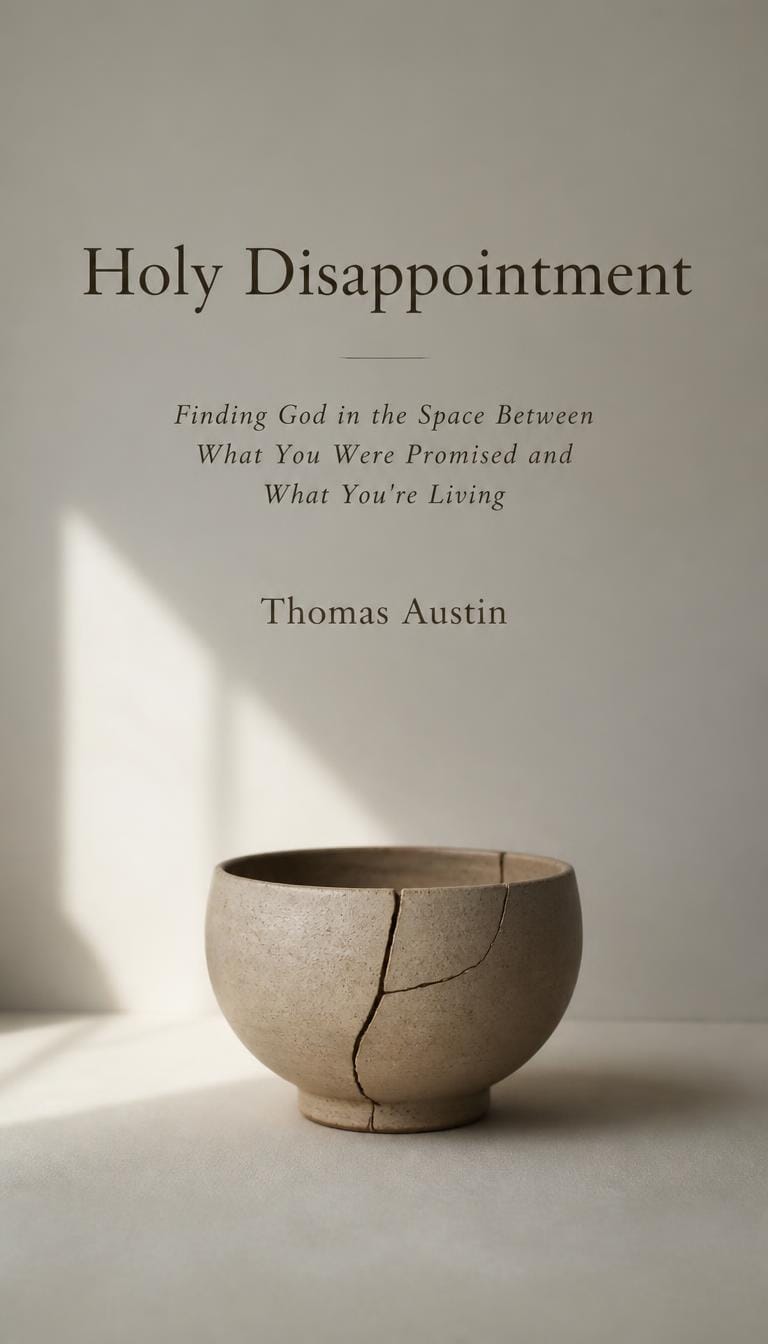
If this resonated, my book Holy Disappointment goes further into finding god in the space between what you were promised and what you're living. A companion for anyone whose faith didn't turn out the way they expected. Holy Disappointment walks through twenty chapters of honest reflection on unmet expectations, unanswered prayers, and finding God in the gap between what you were promised and what you're living. Get Holy Disappointment on Amazon.


Comments ()