Faith When Life Takes an Unexpected Turn
Faith when life takes an unexpected turn can feel disorienting, but God can still meet you there with hope, purpose, and peace.

Faith When Life Takes an Unexpected Turn
You thought life would look different by now. Perhaps a relationship ended, a diagnosis changed the calendar, a job disappeared, or a long-prayed-for answer never came. What does faith look like when the future you imagined is no longer available?
How Do You Hold Onto Faith When Life Does Not Go as Planned?
Holding onto faith means bringing your disappointment, grief, and questions honestly to God while taking the next faithful step you can see. It does not require pretending the loss is small or believing everything will quickly improve. Trust can begin with staying present to God when certainty is gone.
Why Do Unexpected Seasons Hurt So Much?
An unexpected turn is rarely only about changed circumstances. It also disrupts the story we had been telling ourselves about our lives. We did not simply expect to get married, raise a family, build a career, recover from an illness, or serve in a certain way. We began arranging our identity around that expected future.
Then the phone rings. The doctor uses a word you were not prepared to hear. Your spouse says the marriage is over. The employer schedules a meeting for 9:00 on Friday morning and disables your email before lunch. News arrives, and suddenly there is a before and an after.
That kind of disruption produces grief, even when no one has died. You may be grieving a home you had to leave, a child you hoped to have, a church that no longer feels safe, or a version of yourself you can no longer recover. These losses are real. They deserve more than a rushed reminder that God has a plan.
Sometimes Christians feel guilty for being deeply disappointed. We assume that sadness reveals weak faith or that questions make us ungrateful. But pain is not proof that we have stopped trusting God. Pain often shows that something mattered to us. Grief is love and hope responding to an absence.
Life takes unexpected turns for many reasons. We live in vulnerable bodies. Other people make choices that affect us. Institutions fail. Accidents happen. Some doors close because of our own mistakes, while others close without any explanation we can understand. Scripture does not reduce every loss to a tidy cause, and we should be cautious about doing so.
There may eventually be growth or purpose in an unexpected season, but that does not mean the loss was secretly pleasant or that God needed to wound you in order to teach you. Meaning is not found by denying what happened. It begins by telling the truth about it.
What Does the Bible Say About Disappointed Expectations?
The Bible is full of people whose lives did not follow the path they expected. Joseph was betrayed by his brothers and imprisoned. Naomi left home during a famine and returned without her husband or sons. David was anointed as king, then spent years hiding from Saul. Paul planned journeys that illness, opposition, and imprisonment repeatedly disrupted.
These stories are not simple formulas in which suffering quickly leads to visible success. They show people meeting God inside long periods of confusion. Sometimes circumstances change. Sometimes the person must learn to live faithfully within circumstances that remain difficult.
The Psalms are especially honest about this tension. In Psalm 13:1, David asks, “How long, Lord? Will you forget me forever?” That sentence is not spoken outside faith. It is spoken directly to God. David’s complaint is itself a form of relationship. He feels abandoned, yet he continues addressing the One whose presence he cannot currently recognize.
Jesus also refused to pretend that obedience made pain painless. In Gethsemane, he said, “My soul is overwhelmed with sorrow to the point of death” (Matthew 26:38). He asked for the cup to pass from him. His surrender came after naming what he wanted, not instead of it.
This matters because biblical trust is not emotional denial. Faith does not mean calling a devastating event good. It means believing that God can still be addressed, sought, and followed when life itself does not feel good.
The Christian story also makes room for delayed understanding. On the road to Emmaus in Luke 24, two disciples tell the unrecognized Jesus, “We had hoped” that he was the one who would redeem Israel. Their expectations had collapsed at the cross. Jesus walked beside them before they understood who he was. His hidden presence did not erase their confusion, but it meant their confusion was not the whole story.
If you are struggling with a long delay rather than a sudden loss, Trusting God in Seasons of Waiting offers a related reflection on living faithfully when answers do not arrive on your preferred timeline.
How Can You Move Through an Unexpected Season?
Begin by naming what changed. General statements such as “everything is terrible” can leave pain feeling shapeless. Try using a more exact sentence: “I thought I would still be married,” “I expected my body to recover,” or “I believed this ministry would last.” Specific language helps you identify what you are actually grieving.
Then allow yourself to mourn both the visible loss and the imagined future attached to it. A canceled plan can contain years of private hope. You may need to grieve birthdays that will look different, work you expected to do, or ordinary routines you assumed would continue. There is no faithful shortcut around that process.
Bring the unedited version of your thoughts to God. Prayer in an unexpected season may not sound composed. It might be, “I am angry,” “I do not understand,” or “I do not know whether I can trust you today.” God is not protected by our politeness. The Psalms suggest that honest prayer is better than religious silence built from fear.
It can also help to separate today’s responsibility from tomorrow’s uncertainty. You may not know where you will live in six months, whether the treatment will work, or when employment will come. Ask a smaller question: What is mine to do today? The answer may be making one phone call, eating a meal, attending an appointment, submitting an application, or asking someone to sit with you.
Let other people carry what you cannot carry alone. Choose one or two trustworthy people who can listen without explaining your pain. You do not need someone who turns every conversation into a lesson. You need people who can remember the appointment date, bring dinner without demanding conversation, or sit beside you when prayer feels impossible.
Pay attention to your body as well as your beliefs. Grief can interrupt sleep, appetite, concentration, and memory. Spiritual care may include rest, medical support, counseling, movement, or time away from unnecessary demands. Receiving practical help is not a failure of faith. We are embodied people, and distress does not remain neatly inside the soul.
Finally, loosen your demand for an immediate explanation. The mind often searches for a reason because reasons can create a sense of control. But forced answers may injure us further. “I do not know why this happened” can be a faithful statement. Mystery is uncomfortable, but it is more honest than assigning God motives he has not revealed.
How Do You Keep Faith Without Pretending It Does Not Hurt?
You keep faith by refusing to make certainty the price of relationship with God. Some days trust will feel like confidence. On other days it may look like a two-sentence prayer, showing up at church and sitting near the exit, or allowing someone else to believe on your behalf.
Small practices matter in seasons when large declarations feel false. Read one psalm instead of setting an ambitious study plan. Light a candle during prayer. Write down one question you want to keep bringing to God. Take a slow walk without trying to turn it into a spiritual achievement. These actions do not solve grief. They create room to remain present.
It is also possible to hold more than one truth at a time. You can be grateful for the people who stayed and angry about the person who left. You can believe God is loving and feel unable to sense that love. You can notice a moment of beauty and still wish your life had taken another path. Hope does not require emotional consistency.
Over time, an unexpected season may expose beliefs that could not carry the weight placed on them. Perhaps you assumed obedience would guarantee safety, prayer would produce a particular outcome, or careful planning would protect you from loss. Releasing those assumptions can feel like losing faith, but it may actually be the beginning of a more durable trust.
Deeper faith is not always louder faith. It may be less certain about outcomes and more honest about need. It may stop demanding that God restore the old plan and begin asking how to live truthfully within the life that is here. That is not resignation. It is the slow work of receiving reality without surrendering your soul to despair.
Purpose may eventually emerge, but it should not be rushed. Sometimes purpose looks less like discovering a grand reason and more like becoming attentive, compassionate, and available. The person you become in this season matters, even if the season itself is one you never would have chosen.
Your life may not return to the path you planned. The hurt may remain part of your story. But you do not have to resolve every question today. For now, faith can be the quiet decision to tell God the truth and stay for one more step.
Keep Reading
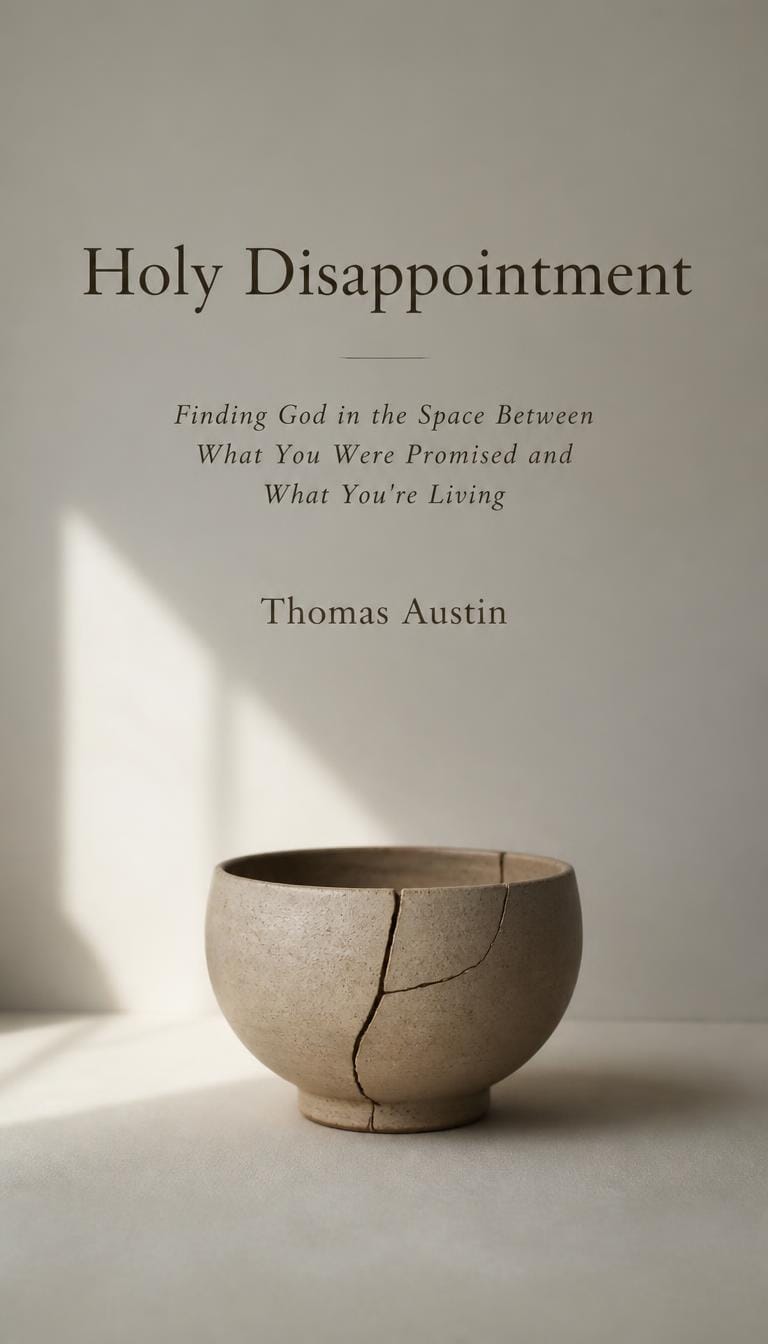
If this resonated, my book Holy Disappointment goes further into finding god in the space between what you were promised and what you're living. A companion for anyone whose faith didn't turn out the way they expected. Holy Disappointment walks through twenty chapters of honest reflection on unmet expectations, unanswered prayers, and finding God in the gap between what you were promised and what you're living. Get Holy Disappointment on Amazon.


Comments ()